This Is What Happens When Art Comes Alive on Lombok Island
You know that feeling when you stumble upon something so real, it shifts your whole perspective? That’s exactly what happened when I stepped into the heart of Lombok, Indonesia. Far from just beaches and volcanoes, this island pulses with artistic soul. Traditional dances, handwoven textiles, and centuries-old ceremonies aren’t performances here—they’re lived experiences. If you’re chasing culture that breathes and moves, not just sights to tick off, Lombok’s vibrant art scene will leave you absolutely speechless.
The Rhythm of Sasak Culture
The essence of Lombok cannot be understood without knowing the Sasak people, the island’s indigenous majority who have shaped its cultural identity for generations. Numbering over 80% of the population, the Sasak live in harmony with traditions that govern not only their spiritual lives but also their social structures, architecture, and daily rhythms. Their villages, often nestled in the central highlands, are laid out in concentric patterns reflecting communal values—homes clustered around shared spaces where decisions are made collectively and wisdom is passed orally from elders to youth. In these communities, art is not something hung on a wall or performed on a stage; it is embedded in the very fabric of existence.
Visitors to traditional Sasak villages such as Sade or Rembitan step into living museums where centuries-old practices remain unbroken. Houses are constructed from bamboo and thatch, using techniques unchanged for hundreds of years. The walls, made from woven palm fiber and mud, are not just functional—they are expressions of environmental wisdom and aesthetic simplicity. Even the act of greeting a neighbor follows a rhythm, a kind of social choreography that mirrors the island’s artistic sensibility. These villages do not exist for tourism, though they welcome respectful guests. The ceremonies, crafts, and songs witnessed here unfold naturally, rooted in meaning rather than spectacle.
One of the most powerful ways to engage with Sasak culture is through participation. In some villages, women invite visitors to sit beside them as they grind rice or prepare offerings, sharing stories in soft, melodic tones. Men may demonstrate how to weave palm leaves into roofing or explain the symbolism behind ancestral carvings. These moments are not performances; they are invitations into a world where every action carries significance. For the traveler, especially one seeking depth over distraction, this quiet authenticity offers a rare kind of connection—one that lingers long after the journey ends.
Weaving Stories: The Craft of Songket and Ikat
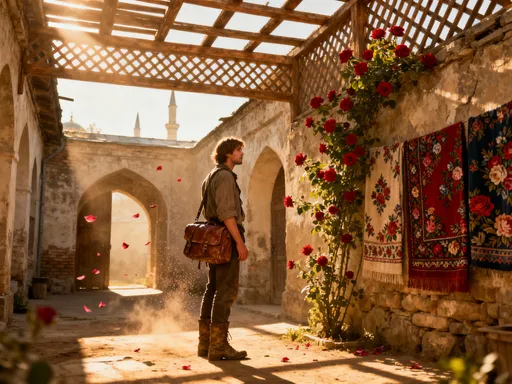
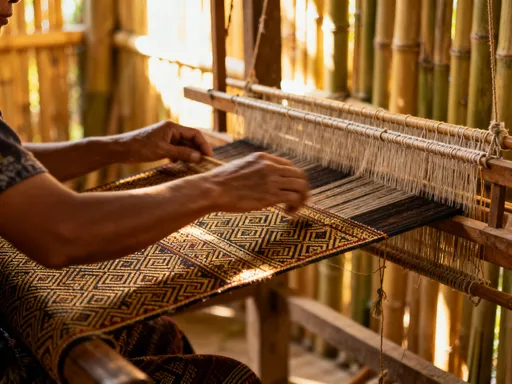
If the soul of Lombok has a texture, it is found in its textiles. The island’s handwoven fabrics—particularly songket and ikat—are not merely beautiful; they are vessels of memory, identity, and resistance. Each piece tells a story, encoded in patterns that speak of lineage, belief, and the natural world. In villages like Sukarara and Penujak, generations of women have preserved these crafts, working at wooden looms with a focus so deep it feels meditative. To watch them is to witness time slowed, where every thread is chosen with intention and every knot tied with care.
Songket, the more luxurious of the two textiles, is made by interweaving gold or silver threads into cotton or silk, creating shimmering geometric or floral motifs. Traditionally worn during weddings and religious ceremonies, songket is more than ceremonial attire—it is a symbol of honor and continuity. The process is painstaking: designs are first drawn on graph paper, then transferred to the loom. Threads are dyed using natural pigments from roots, leaves, and bark, producing rich earth tones—deep indigo, terracotta red, forest green. The rhythmic clack of the shuttle moving back and forth fills the air, a sound that has echoed through these homes for centuries.
Ikat, on the other hand, is a resist-dyeing technique where threads are tied and dyed before weaving, resulting in blurred, dreamlike patterns. The word “ikat” itself means “to tie” in Malay, and the method requires extraordinary precision. A single mistake in tying can distort the entire design. In Sukarara, a women’s cooperative has turned this craft into both cultural preservation and economic empowerment. Here, visitors can sit with artisans, learn the basics of tying and dyeing, and even try their hand at weaving under gentle guidance. These women speak proudly of their work, not as artisans for tourists, but as guardians of a legacy.
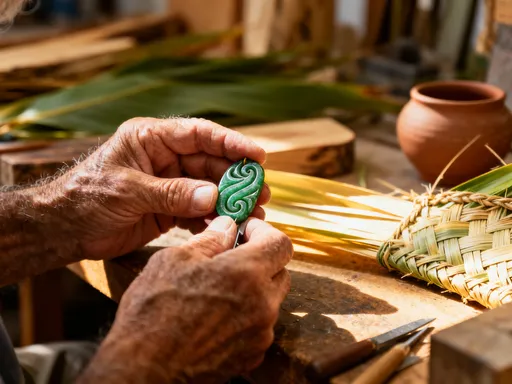
What makes Lombok’s textile tradition so powerful is its sustainability. No synthetic dyes are used in the most authentic workshops. Water is recycled, materials are sourced locally, and waste is minimal. This deep respect for nature mirrors the Sasak worldview, where humans are not separate from the environment but part of its balance. When you carry home a piece of Lombok cloth, you are not just owning art—you are holding a philosophy, a way of being that values patience, community, and reverence for the earth.
Dance as Devotion: The Power of Peresean and Gendang Beleq
On Lombok, music and movement are not entertainment—they are acts of devotion, protection, and unity. Two of the island’s most compelling traditional performances, Peresean and Gendang Beleq, embody this spiritual depth. These are not polished stage shows designed for applause; they are raw, rhythmic expressions of identity, often performed during harvests, religious festivals, or rites of passage. To witness them is to feel the pulse of a culture that dances not for eyes, but for meaning.
Peresean, the warrior dance, is a breathtaking display of courage and discipline. Performed by pairs of young men, it mimics ancient combat using rattan shields and bamboo sticks. The dancers move in tight formation, striking their shields with sharp, rhythmic precision. What makes Peresean extraordinary—and at times startling—is that performers often endure real blows, sometimes drawing blood, as a testament to their endurance and spiritual protection. Elders believe that those properly prepared through prayer and ritual are shielded from serious harm. This is not theater; it is a test of spirit, a living tradition that reinforces values of bravery, humility, and communal responsibility.
Equally powerful is Gendang Beleq, a massive drum ensemble that transforms public spaces into vibrating cathedrals of sound. A single performance can involve up to 20 musicians, each carrying a large double-headed drum slung over the shoulder. The drums are played while marching, creating a dynamic, mobile concert that pulses through villages during celebrations. The rhythm is complex and layered—deep, resonant beats intertwine with higher-pitched patterns, building in intensity until the entire body feels the vibration. When performed at dusk, with torches flickering and shadows dancing on walls, the effect is transcendent.
Both Peresean and Gendang Beleq originate from pre-Islamic animist traditions, later adapted into the island’s unique blend of Islam and ancestral belief. They are not performed on demand for tourists but emerge organically from community life. The best way to experience them is by timing a visit with local festivals—such as the rice harvest or village anniversaries—where they occur as acts of gratitude and unity. For the observer, the lesson is clear: art on Lombok is not separate from life. It is life, amplified.
Ceremonies That Shape the Year
The calendar on Lombok is not marked by commercial holidays but by rituals that honor nature, ancestors, and the cycles of agriculture. These ceremonies are not relics of the past; they are active, evolving traditions that shape the rhythm of daily life. For the traveler, participating in or observing these events offers a rare window into the island’s soul. Unlike staged cultural shows, these gatherings are deeply meaningful, involving preparation, prayer, and collective effort that can span weeks.
One of the most unique is the Nyale Festival, held annually in February or March along the southern coast, particularly in the village of Kuta. Rooted in a romantic legend, the festival celebrates the sea worms (nyale) that appear during the full moon, believed to be the化身 of a princess who drowned herself to escape an unwanted marriage. Fishermen and families gather at dawn to catch the worms, which are considered a delicacy and a symbol of fertility and prosperity. The event includes traditional music, dance, and boat races, but at its heart is a story of love, sacrifice, and the connection between humans and the ocean. For visitors, the experience is both joyful and profound—a reminder that myths are not just tales, but frameworks for understanding life.
Another significant ritual is Ekar Karang, a rice harvest ceremony practiced in inland villages. Before the first grains are collected, offerings are prepared—flowers, rice cakes, and incense—placed at the edge of the field as a gift to the spirits of the land. Elders lead prayers, asking for continued abundance and protection from pests or drought. The entire community participates, from elders who chant blessings to children who help gather the sheaves. After the harvest, a feast is shared, and traditional songs are sung late into the night. This is not a performance; it is a sacred exchange between people and nature.
For travelers, timing a visit around these ceremonies requires research and flexibility, but the reward is immeasurable. It means witnessing culture not as a display, but as a living practice. It also demands respect: visitors should dress modestly, ask permission before photographing, and avoid interrupting rituals. In return, they are often welcomed with warmth and curiosity. These moments of connection—shared food, a smile, a gesture of thanks—are the true treasures of travel, far surpassing any souvenir.
Art Beyond Tradition: Emerging Creatives on the Island
While Lombok’s ancient traditions remain strong, a new generation of artists is reimagining what culture can be. In the capital city of Mataram, small galleries and studios showcase paintings, ceramics, and mixed-media works that honor Sasak heritage while embracing contemporary expression. These artists are not rejecting tradition; they are conversing with it, using modern techniques to explore ancestral themes. Their work speaks of identity, change, and the quiet resilience of a people navigating the currents of globalization.
One such artist, whose studio sits on the edge of Senaru village near Mount Rinjani, creates large canvases inspired by Sasak mythology. Using natural pigments and recycled materials, she blends traditional motifs with abstract forms, creating pieces that feel both ancient and new. In her studio, she hosts informal workshops for local youth, teaching not just painting but storytelling, language, and cultural pride. “Our stories are still alive,” she says, “but they need new voices to carry them forward.”
Similarly, young musicians in Mataram are experimenting with traditional Sasak instruments—such as the reong (a set of bronze pots) and suling (bamboo flute)—fusing them with modern genres like acoustic folk and ambient music. Their performances, often held in open-air cafes or community centers, attract both locals and travelers seeking something authentic yet fresh. These innovations are not diluting tradition; they are ensuring its survival in a changing world.
Support for emerging creatives comes from grassroots initiatives and cultural cooperatives that provide space, materials, and training. Some are funded by community tourism projects, where a portion of homestay or tour fees goes directly to artist residencies or youth programs. This model creates a sustainable ecosystem: tourism supports art, and art enriches tourism. For visitors, engaging with these new expressions offers a fuller picture of Lombok—not as a static museum of the past, but as a living, evolving culture.
How to Experience It Right: A Traveler’s Guide
To truly appreciate Lombok’s artistic heritage, travelers must move beyond the role of spectator and become respectful participants. This begins with choosing the right kind of experience. Community-based tourism initiatives, such as homestays in Sade or Sukarara villages, offer immersive opportunities to live alongside locals, share meals, and learn directly from artisans. These programs are often run by village cooperatives, ensuring that income stays within the community.
Hiring a local guide is another essential step. Unlike generic tour operators, Sasak guides speak not only the language but the culture. They can explain the meaning behind a ritual, introduce you to a weaver’s family, or help you navigate a festival with appropriate etiquette. Many guides are former farmers or teachers who now dedicate their time to cultural preservation through tourism. Their knowledge transforms a simple visit into a meaningful exchange.
When photographing people or ceremonies, always ask for permission. A smile and a simple “Boleh foto?” (Can I take a photo?) go a long way. Avoid treating locals as props; instead, build rapport, learn a few words of Bahasa Sasak, and express genuine interest. In return, you’ll often be invited into homes, offered tea, or taught a traditional song.
Visiting during the shoulder or off-season—between April and October—can also enhance authenticity. Fewer crowds mean more space for real interactions, and local life unfolds without the pressure of tourist demand. Dress modestly, especially in villages: cover shoulders and knees, remove shoes before entering homes, and speak softly in sacred spaces. Simple gestures of respect open doors that no amount of money can buy.
Finally, consider joining an ethical workshop—whether weaving, drumming, or natural dyeing. These are not quick demonstrations but guided experiences that honor the time and skill behind each craft. By participating, you do more than learn a technique; you affirm the value of the work and the person who does it.
Why This Matters: Keeping Culture Alive
In an age where mass tourism often flattens culture into clichés, Lombok stands as a powerful reminder of what travel can be: a bridge between worlds, a gesture of respect, a celebration of difference. The art here is not for sale in the ordinary sense. It cannot be rushed, packaged, or replicated. It grows slowly, nurtured by generations of care, belief, and connection. When travelers engage with it mindfully, they become part of its continuation.
Responsible cultural tourism does more than enrich the visitor—it sustains entire communities. Every homestay booking, every workshop fee, every respectful interaction contributes to the preservation of traditions that might otherwise fade. It empowers women weavers, supports young artists, and validates the wisdom of elders. It tells a community that their way of life is not obsolete, but valuable, beautiful, and worthy of protection.
But beyond economics, there is a deeper exchange. In the quiet moment when a grandmother teaches you to tie a dye knot, or a drummer lets you feel the pulse of the Gendang Beleq, something shifts. You are no longer just seeing culture—you are feeling it. You begin to understand that art is not separate from life, that rhythm and thread and song are not decorations, but the very structure of meaning.
Lombok does not offer escape. It offers awakening. It invites you to slow down, to listen, to honor. In a world that moves too fast, that values the new over the enduring, the island’s living art is a quiet rebellion—a testament to the power of continuity, community, and care. To visit Lombok is not to check a destination off a list. It is to step into a story that has been unfolding for centuries, and to become, however briefly, part of its next chapter.