How I Found Calm in Just 10 Minutes: My Qi Gong Journey
Ever feel like your energy is scattered no matter how much rest you get? I did—until I tried qi gong. This ancient Chinese practice helped me reconnect with my body and mind in a way that felt natural, not forced. No intense workouts, no strict diets—just gentle movements and breath. I started seeing shifts in my focus, sleep, and mood within days. If you're looking for a simple, science-backed way to boost your daily vitality, this is worth exploring. Let me share what actually worked for me.
The Burnout Breakthrough: Why I Tried Qi Gong
For years, I believed exhaustion was part of adulthood. As a mother of two and someone managing a part-time career, my days were packed from the moment I opened my eyes. I relied on coffee to start the morning, sugar to get through the afternoon, and long hours in bed to recover—yet I still woke up feeling drained. My sleep was restless, my thoughts scattered, and my patience thin. I tried everything: longer nights, vitamin supplements, even high-intensity workouts. But pushing harder only made me feel worse.
It wasn’t until a friend mentioned she had started practicing qi gong that I considered a different path. She didn’t look dramatically different, but there was a calm in her voice, a steadiness in her presence that caught my attention. She described how just ten minutes a day had helped her feel more grounded, more in control. At first, I was skeptical. How could slow, quiet movements possibly counteract the demands of modern life? But desperation led me to give it a try—and that small decision changed everything.
Qi gong entered my life not as a cure, but as a quiet alternative to the constant doing that had defined my routine. Unlike other wellness trends that required equipment, space, or hours of commitment, this practice asked for almost nothing—just presence. Rooted in Traditional Chinese Medicine, qi gong is designed to restore balance, not deplete energy. It doesn’t demand perfection or performance. Instead, it invites you to listen—to your breath, your body, your inner rhythm. In a world that glorifies busyness, this was revolutionary.
What surprised me most was how quickly I noticed changes. Within a week, my sleep deepened. By the second week, I felt less reactive to daily stressors. I wasn’t magically transformed, but I was more myself. The mental fog that used to hover over my afternoons began to lift. This wasn’t about fixing a flaw—it was about reconnecting with a part of myself I had long ignored. Qi gong didn’t add to my to-do list; it helped me step off the treadmill of constant effort.
What Exactly Is Qi Gong? (And Why It’s Not Just “Slow Exercise”)
At its core, qi gong is a system of coordinated movement, breath, and mindful awareness designed to cultivate and balance vital energy, known in Chinese tradition as qi (pronounced “chee”). The word “gong” means cultivation or practice, so together, qi gong translates to “the practice of cultivating life energy.” While it may look like slow motion exercise from the outside, it operates on a deeper level—engaging the nervous system, improving circulation, and enhancing mental clarity through gentle, intentional actions.
Unlike aerobic workouts that stress the body to build strength, qi gong works by restoring harmony. It’s based on the principle that when energy flows freely through the body, health follows. When that flow is blocked or disrupted—by stress, inactivity, or emotional strain—discomfort and fatigue can arise. Qi gong uses repetitive, flowing motions combined with deep abdominal breathing to unblock and circulate qi, supporting both physical and emotional well-being.
It’s often compared to tai chi, and while the two share roots and movements, qi gong is generally simpler and more accessible. Tai chi is often practiced as a martial art with complex sequences, while qi gong focuses on shorter forms or even stationary practices, making it ideal for beginners or those with limited mobility. It’s also distinct from yoga, though both emphasize breath and movement. Yoga often involves stretching and holding poses to build flexibility and strength, whereas qi gong prioritizes internal awareness and energy regulation over physical challenge.
In Traditional Chinese Medicine, qi gong is considered a preventive and restorative practice. It’s used to strengthen the organs, support immunity, and maintain emotional balance. Practitioners believe that consistent practice helps align the body’s energy pathways, known as meridians, promoting long-term health. While modern science may not use the term “qi,” research confirms that the physiological effects—such as improved oxygenation, reduced muscle tension, and parasympathetic activation—are very real.
The Science Behind the Stillness: What Research Says
For many, including my past self, the idea of “energy flow” sounds too abstract to trust. That’s why I was relieved to find growing scientific support for qi gong’s benefits. Numerous peer-reviewed studies have examined its impact on both mental and physical health, and the findings are compelling. One meta-analysis published in the Journal of Alternative and Complementary Medicine found that regular qi gong practice significantly reduced symptoms of anxiety and depression. Participants reported better emotional regulation and a greater sense of calm, even after just a few weeks.
Sleep quality is another area where research shows clear improvement. A 2020 study involving middle-aged women with mild insomnia found that those who practiced qi gong for eight weeks fell asleep faster, stayed asleep longer, and reported feeling more rested upon waking. Scientists believe this is due to the practice’s ability to lower cortisol levels—the hormone associated with stress—and activate the parasympathetic nervous system, which governs rest and recovery.
Physical benefits are also well-documented. Research has linked qi gong to improved balance, reduced chronic pain, and enhanced immune function. A study from the University of Florida showed that older adults who practiced qi gong three times a week experienced fewer colds and respiratory infections over a six-month period. The practice appears to support immune response by reducing inflammation and improving circulation.
Perhaps most relevant to people experiencing burnout is qi gong’s effect on fatigue. Unlike stimulants that provide a temporary boost followed by a crash, qi gong works by increasing sustainable energy. A clinical trial with patients suffering from chronic fatigue syndrome found that those who practiced qi gong reported increased vitality and reduced exhaustion compared to the control group. These changes were attributed to improved mitochondrial function and better oxygen utilization in the cells.
It’s important to note that qi gong is not a miracle cure. It won’t erase medical conditions or replace professional treatment. But as a complementary practice, it offers something rare in modern wellness: a low-risk, high-reward tool that supports the body’s natural ability to heal and regulate itself. The science doesn’t promise overnight transformation, but it does confirm what practitioners have known for centuries—consistent, gentle practice leads to real, measurable change.
My 10-Minute Daily Routine That Actually Changed Things
When I first started, I worried I wouldn’t do it “right.” I watched videos of graceful masters moving with precision and thought, There’s no way I can do that. But what I’ve learned is that qi gong isn’t about performance—it’s about showing up. My routine is simple, and that’s exactly why it works. I practice every morning, right after I brush my teeth and before I check my phone. Ten minutes is all it takes, and I’ve found that consistency matters far more than complexity.
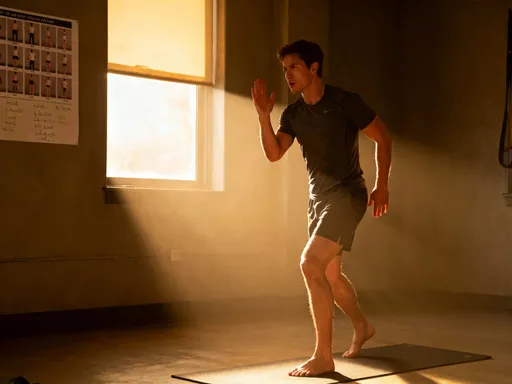
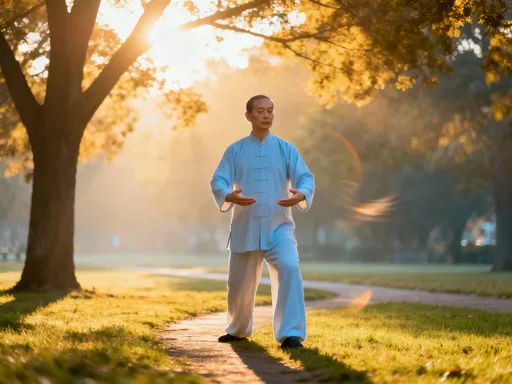
The first part of my practice is Zhan Zhuang, or standing meditation. I stand with my feet shoulder-width apart, knees slightly bent, arms rounded as if hugging a tree. My spine is straight but relaxed, my shoulders down, and my breath slow and deep. I focus on feeling my weight grounded through my feet and my breath moving into my lower abdomen. At first, I could only stand for three minutes without fidgeting. Now, I can stay present for five, and the calm it brings carries into my morning.
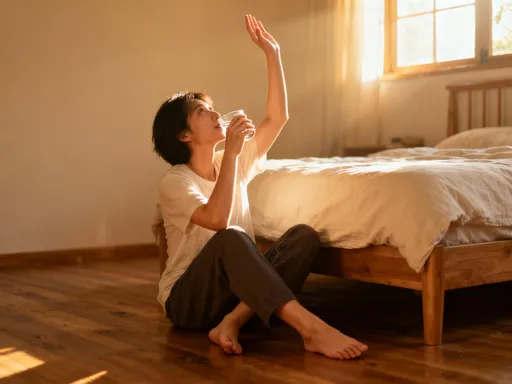
Next, I move into gentle arm waves. With my feet rooted, I let my arms float up in front of me, palms facing down, then slowly rise above my head as I inhale. As I exhale, I lower them back down, imagining I’m guiding energy through my body like water flowing downstream. I repeat this for three minutes, keeping the motion smooth and continuous. It’s not about how high I lift or how fast I move—it’s about staying connected to the rhythm of my breath.
The final segment is diaphragmatic breathing. I sit or lie down, one hand on my chest, the other on my belly. I breathe in slowly through my nose, letting my abdomen rise while my chest stays still. Then I exhale fully through my mouth, gently pulling my navel toward my spine. I do this for two minutes, counting each breath. This part alone has helped me manage moments of overwhelm—now I can pause and reset in the middle of a chaotic day.
None of these movements are difficult, but together, they create a powerful shift. I don’t feel dramatic energy surges or mystical experiences. Instead, I feel more centered, more capable of handling whatever comes my way. The real magic isn’t in the movements themselves—it’s in the daily commitment. I’ve learned that small, steady actions compound over time, and ten minutes a day is enough to rebuild resilience.
Common Misconceptions That Almost Stopped Me
Before I began, I had my share of doubts. The biggest one was, How can something so slow possibly make a difference? In a culture that values speed and intensity, the idea of healing through stillness feels counterintuitive. I worried it was too passive, too “woo-woo,” or only for people who already believe in energy healing. I almost dismissed it before giving it a fair chance—until I reminded myself that many effective therapies are simple, not flashy.
Another myth I struggled with was that qi gong is only for older adults or people with chronic illness. I pictured retirees in parks, moving slowly at sunrise, and thought, This isn’t for someone like me. But the truth is, qi gong is for anyone who breathes. It’s especially valuable for busy, stressed individuals who need a way to reset without adding more strain. The practice meets you where you are—whether you’re 35 or 75, athletic or sedentary.
Perhaps the most persistent misconception is that you have to “believe in qi” for it to work. I didn’t—and still don’t—have a strong metaphysical worldview. But I’ve come to see that belief isn’t required for results. The physiological changes are real: deeper breathing lowers heart rate, gentle movement improves circulation, and focused attention reduces mental chatter. You don’t need to name the energy to feel the shift. It’s like sunlight—you don’t have to understand the science to feel its warmth.
Over time, my skepticism faded not because I had a spiritual awakening, but because I saw tangible improvements. My sleep became more restful. I stopped reaching for snacks when stressed. I noticed I was more patient with my children, more present in conversations. These weren’t coincidences—they were outcomes of a practice that taught me how to slow down, breathe, and return to myself. Qi gong didn’t change my life overnight, but it gave me the tools to change it gradually, one breath at a time.
How to Start Without Overcomplicating It
If I could give one piece of advice to someone considering qi gong, it would be this: start small and keep it simple. You don’t need special clothes, a mat, or a quiet house. You don’t need to memorize complex sequences or understand Chinese philosophy. All you need is ten minutes and a willingness to try. The barrier to entry is intentionally low—because the goal is sustainability, not perfection.
I began by finding a quiet corner in my living room, somewhere I wouldn’t be interrupted. I wore comfortable clothes—sometimes just my pajamas. I used a free app that guided me through a basic routine, which helped me stay on track when I felt unsure. There are also many reputable YouTube channels offering beginner-friendly sessions. The key is to find a voice and pace that feel calming, not rushed.
I recommend starting with just five minutes a day. Even that can feel like a lot at first. Focus on one element—standing still and breathing, or raising and lowering your arms slowly. Pay attention to how your body feels, not how it looks. There’s no scorecard, no progress bar. The only measure of success is showing up.
It also helps to track subtle changes. I kept a small journal where I noted things like “slept well,” “felt calm during traffic,” or “didn’t snack after dinner.” These small wins reinforced my commitment. I didn’t expect dramatic shifts, and I wasn’t disappointed when they didn’t come. Instead, I celebrated consistency. And over time, the accumulation of small moments created a new normal—one where calm wasn’t something I chased, but something I carried with me.
One word of caution: don’t push too hard. Qi gong is not about effort. If you feel strain, adjust your posture or shorten your session. This is not a test of endurance. It’s a practice of self-care. If you miss a day, simply begin again. There’s no penalty, no failure—only the ongoing invitation to return.
Beyond the Mat: How Qi Gong Shifted My Whole Day
What surprised me most wasn’t how I felt during practice—but how I felt the rest of the day. The calm I cultivated in those ten minutes began to ripple outward, influencing choices I didn’t even realize were connected. I started noticing my posture—standing taller, sitting with less tension. I caught myself before reacting sharply to small frustrations. I became more aware of my eating habits, choosing nourishing foods not out of discipline, but because my body felt more attuned.
One of the most unexpected changes was in my relationship with time. Before qi gong, I felt like I was always behind, rushing to catch up. Now, I move through my day with more intention. I pause before responding to messages. I take deep breaths in traffic instead of gripping the steering wheel. These moments of awareness didn’t come from willpower—they emerged naturally from the practice of slowing down.
Qi gong also helped me redefine what self-care means. It’s not about spa days or expensive retreats. It’s about daily acts of presence. It’s choosing to breathe instead of react, to stand still instead of rush. It’s treating my body not as a machine to be driven, but as a living system that thrives on balance. This shift in mindset has made all the difference.
Perhaps the greatest gift has been patience—with myself and with others. I’ve become more forgiving of my imperfections, more accepting of life’s unpredictability. I still have busy days, stressful moments, and moments of doubt. But now I have a way to return to center. Qi gong isn’t an escape from reality—it’s a way of engaging with it more fully, more peacefully.
In many ways, this practice has become my anchor. It doesn’t require grand gestures or hours of time. It asks only for a few minutes of attention each day. And in return, it offers something priceless: the ability to feel at home in my own body, even in the middle of a chaotic world.